
Edgar Degas

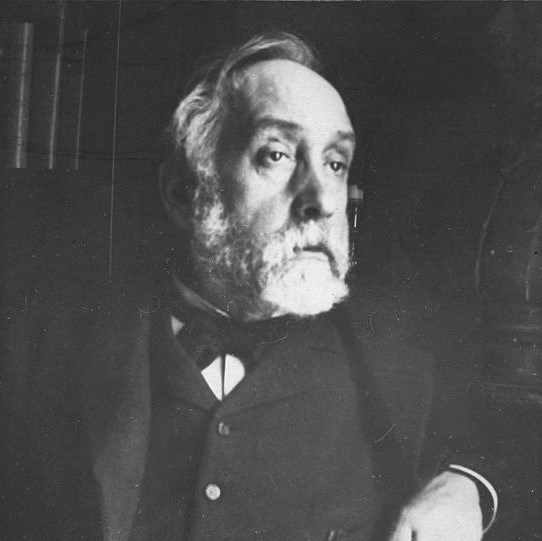
July 19, 1834 (Paris, France) – September 27, 1917 (Paris, France)
A prolific draftsman from a young age, Edgar Degas ended his law studies in 1855 to join the studio of Louis Lamothe, a former student of Ingres. He acquired a great mastery of drawing by the study of history painting, a major characteristic inseparable from his art. Although his early works reveal a strong attachment to classical tradition, Degas aspired to free himself from academic conventions. In the 1860s, he joined Monet, Manet, and Renoir at the tables of Café Guerbois, where they debated the future of modern painting. As other artists joined, the group expanded and was formalized under the name Société anonyme des artistes peintres, sculpteurs et graveurs in December 1873, later renamed by critics as the “Impressionists.”
Degas became one of the founders of the Impressionist movement and continued to exhibit under this label. However, he did not fully identify with his most recognized traits, preferring to define himself as a “defender of the realist movement”. He explored new subjects: women at their toilette, café scenes, laundresses and ballet dancers. These last ones became his favorite subject from the 1870s onwards. He excelled at highlighting his subjects through simplified compositions, elevated viewpoints, and contrasting light effects.
Although Degas is celebrated as one of the painters of modern life, its licentious side was not always accepted as a worthy subject. Following the naturalist approach that Zola had initiated in literature, the painter wanted to reveal the cruelty of a world that he captured in all its sociological complexity. This avant-garde approach often struggled to gain critical support; as seen in his work La Petite Danseuse de quatorze ans (The Little Fourteen-Year-Old Dancer) of 1881, whose simian features some interpreted as an embodiment of perversion.
As blindness began to affect him in the 1880s, Degas turned to experimenting with different techniques (pastel, monotype, gouache, sculpture) and evolved his palette toward bold colors, enhancing the expressive power of his style. In his later years, his disability led him to isolate himself in his studio, where he passed away in 1917. Today, his works can be seen in numerous museum and private collections, such as the National Gallery of Art in Washington or the Musée d’Orsay.
Fairs

Publications
-

Chefs-d’oeuvre