André Derain

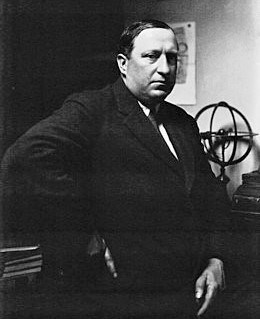
June 10, 1880 (Chatou, Yvelines) – September 8, 1954 (Garches, Hauts-de-Seine)
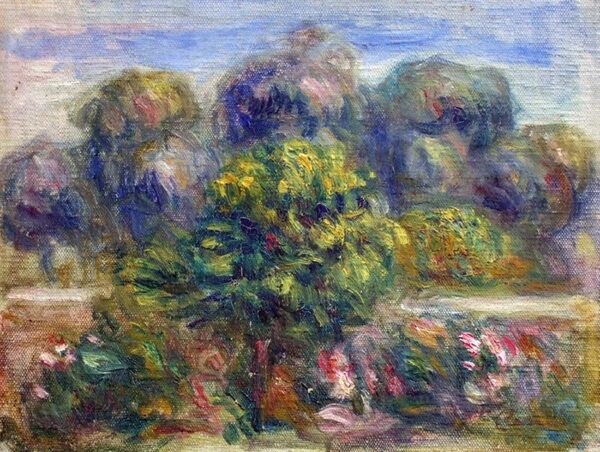
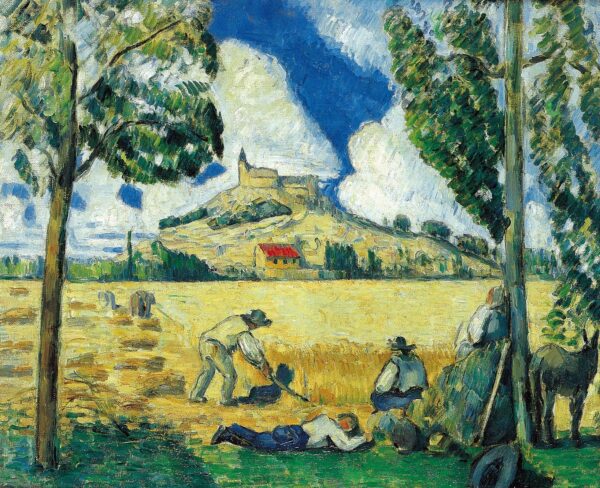
André Derain established himself as a major figure of the avant-garde at the end of the 19th century and the beginning of the 20th century. Trained at the Académie Julian, the French painter quickly integrated into the Parisian avant-garde scene. In 1900, he met the self-taught Vlaminck, with whom he painted the surroundings of Paris outdoors. A year later, while making copies at the Louvre Museum, he met Matisse. From this trio emerged one of the richest exchanges of the early 20th century. Influenced by the works of Cézanne and Van Gogh, they perceived a new conception of space, form, and color, which became the foundation of their artistic reflections.
In 1905, Derain joined Matisse in Collioure, where they created and presented a new style of painting at the Salon d’Automne. In the Room VII, renamed “la Cage aux Fauves” by the art critic Louis Vauxcelles, Fauvism was born. More than a movement, it was a true network of artists adopting in their own way the pure and bold color planes. In 1907, Derain settled in Montmartre, where he associated with the painters of the Bateau-Lavoir. His curiosity quickly led him to new aesthetic explorations; he delved deeper into the study of Cézanne and African art, while witnessing the early stages of Cubism with Picasso and Braque. His painting became simpler, and the forms more geometric, almost sculptural. Derain achieved freedom from all constraints, both in form and color.
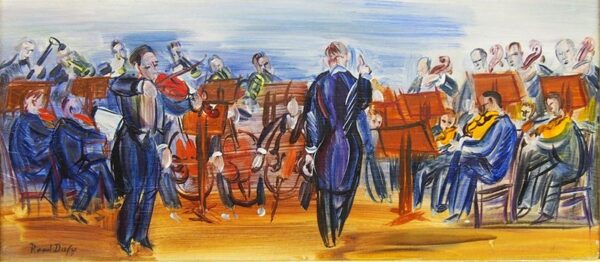
After being mobilized during World War I and deeply marked by this experience, he gradually returned to a more traditional style, producing numerous still lifes and nudes, effectively anticipating the return to classicism embraced by the new generation of painters. Critics celebrated Derain, who constantly offered new visions of painting; he was called “the greatest living French painter” by Élie Faure in the 1920s. His reputation rose further when, in 1928, his painting The Hunt won the Carnegie Prize, earning him international prestige. Beyond numerous exhibitions in Europe and America, Derain’s talent was sought for numerous theater and ballet sets, including Serge de Diaghilev’s La Boutique fantasque in 1919. However, World War II marked a slowdown in his career; he retired to Chambourcy and accepted only a few commissions.
In 1954, the year of his death, the National Museum of Modern Art held a major retrospective recognizing his immense contribution to the history of modern art. Today, his works can be admired in the permanent collections of major museums worldwide, including the National Museum of Modern Art – Centre Pompidou, Musée d’Orsay, Pushkin Museum, and the Tate Gallery.