
Henri Martin

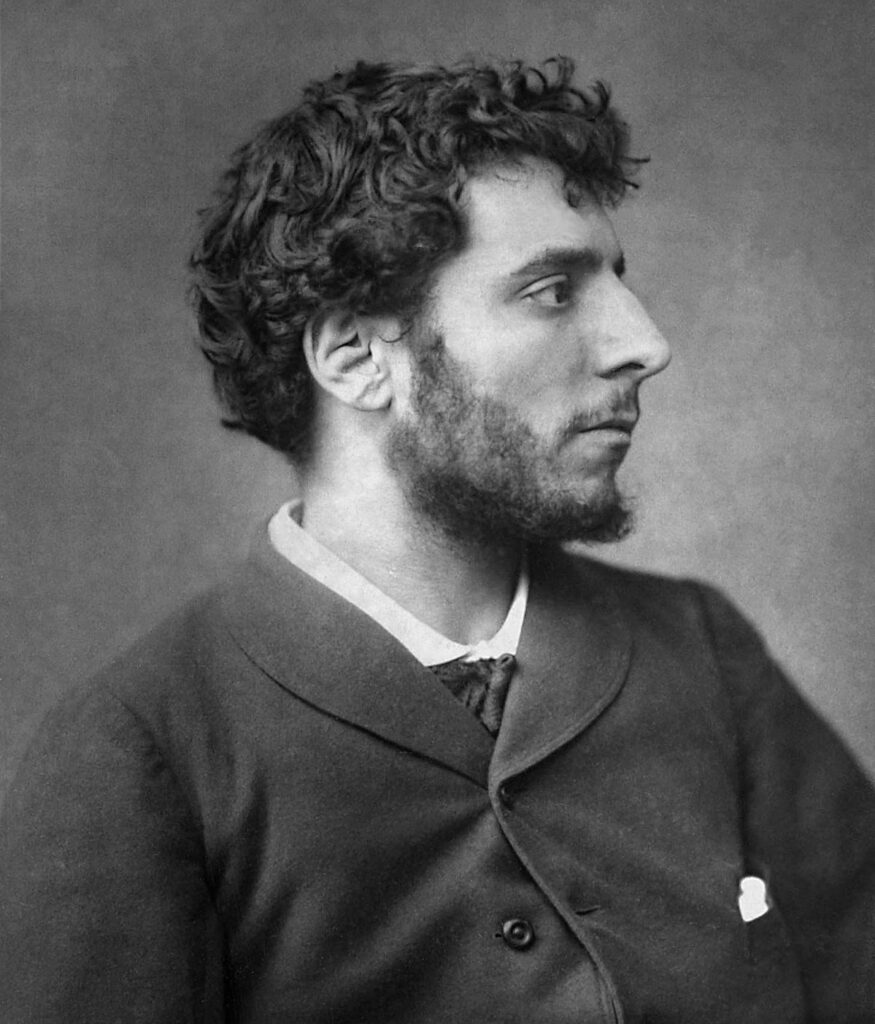
August 5, 1860 (Toulouse, France) – November 12, 1943 (Labastide-du-Vert, France)
Henri Jean Guillaume Martin was born into a bourgeois family. From an early age, he showed an interest in art, and in 1877 he entered the École des Beaux-Arts in Toulouse. Thanks to a municipal scholarship, in 1879 he continued his training at the École des Beaux-Arts in Paris, where he studied under Jean‑Paul Laurens and encountered the main artistic trends of the period. In 1885, he traveled to Italy with other artists, studying the great masters and absorbing Italian landscapes and light, which would deeply influence his artistic vision.
At the end of the 19th century, Martin began developing a personal technique that combined elements of Post-Impressionism, Neo-Impressionism, and Symbolism. His brushwork was characterized by small dabs of color placed close together to create luminous effects and poetic atmospheres. During this period, he painted allegorical and symbolic scenes that reflected an introspective sensibility and an idealized world, moving away from traditional academic models.
During the early decades of the 20th century, Martin continued evolving toward more meditative landscapes, capturing the light and serenity of the French countryside. In 1900, he acquired the Marquayrol estate in Labastide‑du‑Vert, in the Cahors region, where he spent long periods painting the surrounding nature and rural life. This environment became an endless source of inspiration and shaped much of his later work. He also received official commissions to decorate public buildings such as the Capitole of Toulouse and the Sorbonne, consolidating his reputation as a prestigious artist in France.
Henri Martin was recognized by both critics and artistic institutions of his time. He was awarded the Knight of the Legion of Honor and, in 1917, was elected a member of the Académie des Beaux-Arts. His works were exhibited in major salons and acquired by public collections, including the Musée d’Orsay (Paris) and the Musée des Augustins (Toulouse). His paintings are distinguished by a palette dominated by Mediterranean light, idyllic landscapes, and a visual poetry that combines nature with emotion.
Martin spent his final years in the tranquility of Labastide‑du‑Vert with his family, continuing to paint until his death. Today, he is remembered as one of the great French Post-Impressionist painters, capable of combining technique, color, and atmosphere to offer a luminous and poetic vision of nature and life. His works are preserved in museums in France and abroad, and a museum dedicated to his work, the Musée Henri-Martin, is located in Cahors.