
Edouard Vuillard

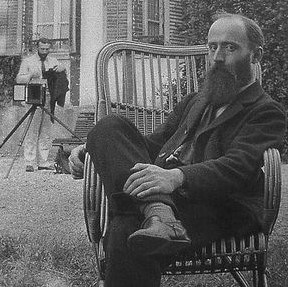
November 11, 1868 – June 21, 1940 (Cuiseaux, France)
Édouard Vuillard was a French painter and designer associated with the Les Nabis movement, known for his intimate depictions of interiors, domestic scenes, and portraits. He was born into a modest family and from a young age he showed an interest in painting. In 1886 he entered the École des Beaux-Arts, where he studied briefly before joining the Académie Julian to complete his artistic training.
In 1888 he met the painter Pierre Bonnard, with whom he developed a close artistic and personal relationship. Together they joined the group of young artists called Les Nabis, which aimed to renew painting through symbolism, color, and intimate everyday scenes. Vuillard specialized in depicting family interiors, capturing atmosphere with soft colors, decorative patterns, and a focus on light and space.
During his career, he also worked as a set designer and decorator, creating tapestries, murals, and theatrical decorations that reflected his distinctive style, characterized by harmonious compositions and a delicate sensitivity to color and texture. His works are noted for balancing representation and abstraction, where everyday objects are integrated poetically into the scene.
Vuillard spent much of his life in Paris and continued painting until shortly before his death. His work was recognized for its delicacy and its ability to convey intimacy and calm, making him one of the most important artists of French post-impressionism. Today, his paintings are preserved in international museums such as the Musée d’Orsay, The Metropolitan Museum of Art (New York), and the Musée National d’Art Moderne, where they continue to be admired for their intimacy, sensitivity, and subtle use of color.
Publications
-
Chefs-d’oeuvre