
Armand Guillaumin

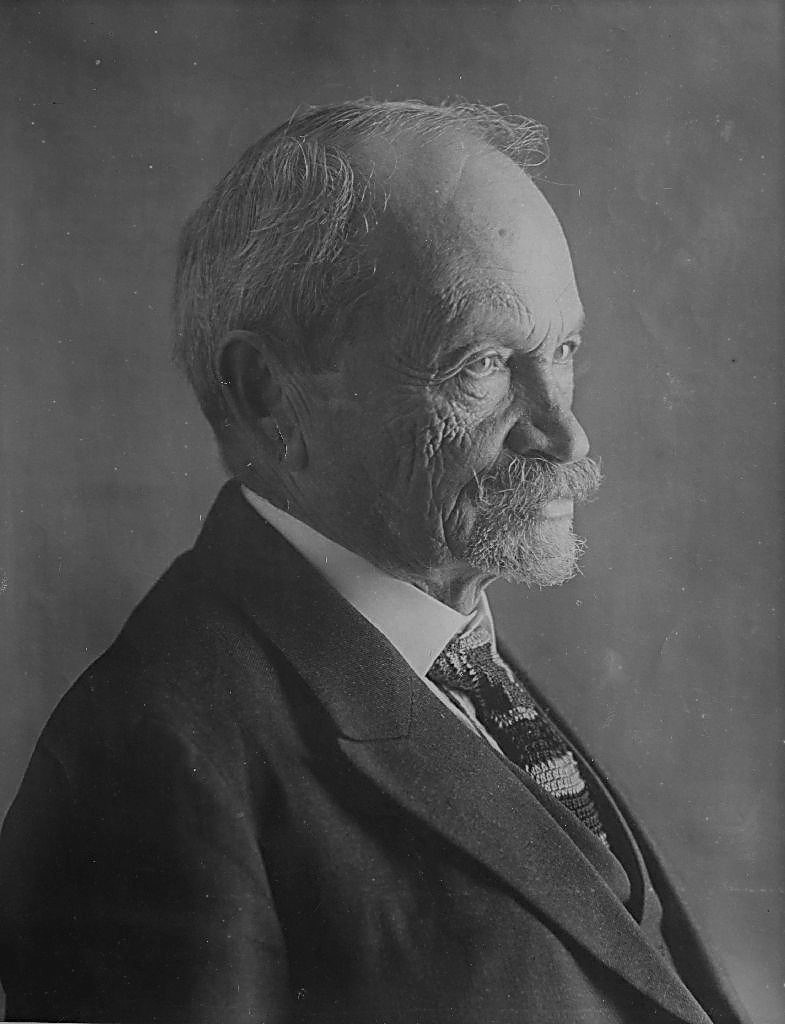
February 16, 1841 (Paris, France) – June 26, 1927 (Orly, France)
Born into a modest family in Moulins, Armand Guillaumin combined his work as a painter with other occupations for much of his life. At the age of 15 he followed his uncle to Paris to work, and was later employed by the Paris-Orléans Railway Company. In 1891 he won 100,000 francs in the state lottery, which allowed him to devote himself entirely to painting. From childhood, Guillaumin practiced drawing and, upon arriving in Paris, enrolled in evening classes. In 1860 he attended the Académie Suisse, where he met Cézanne and Pissarro, with whom he maintained close relationships throughout his life. Together they spent long days painting landscapes in Pontoise and later along the banks of the Seine.
Through the depiction of these landscapes, the movement of rivers particularly fascinated the artist, who sought to capture effects of light and transparency. His explorations brought him closer to the Impressionist group, of which he became one of the earliest and most faithful members. He exhibited his works in most of their exhibitions, including the Salon des Refusés. Noticed by critics, his works reveal an expressiveness that anticipates the liberation of color seen at the beginning of the 20th century. Even before the Fauves, Guillaumin’s landscapes were filled with blazing tones, where the patches of the blue shadow compete with the vivid orange of sunlit plains. This characteristic soon attracted the attention of Van Gogh and Gauguin, with whom the artist formed a strong friendship from 1886 onward, as well as with the young Othon Friesz in 1901.
Towards the end of his life he frequently visited the site of Crozant, where he regularly rented a house. His views of the Creuse remain among the major works of the Crozant School, of which Guillaumin is often regarded as a leading figure. Displayed in numerous collections around the world, his radiant paintings continue to captivate visitors to the Museum of Modern Art in New York, the Musée d’Orsay, the Hermitage Museum in Saint Petersburg and the Petit Palais Museum in Geneva.