
Sohey Iwata

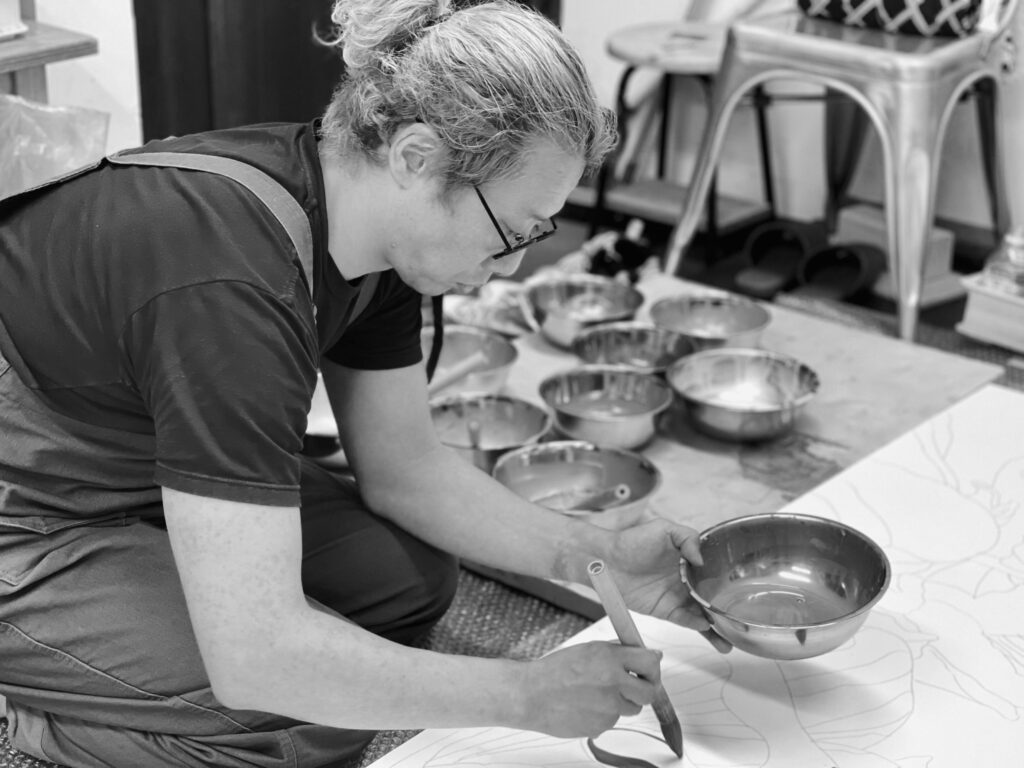
A graduate of the Kanazawa College of Art, Sohey Iwata honed his skills under the master Reiichi Tuchiya. In 2003, he was awarded the Grand Prix of the Ueno Royal Museum. Since then, he has occupied an important place on the Japanese art scene. Although all of his time and energy are devoted to creation, his works remain rare, both for their technical sophistication and for the originality of their approach.
Iwata employs the Tarashikomi method, which consists of applying a second layer of paint or ink onto a first layer that has not yet dried. This technique was popularized in the 17th century by the painter Tawaraya Sōtatsu, a major figure of the Rinpa school. It creates unpredictable effects and textures, often used to depict vegetal or mineral elements in landscapes. In Iwata’s work, the body and the gesture are fully engaged in the creative process. The artist believes that the forces of nature and landscapes are embodied by a multitude of Shinto spirits and deities known as kami. This approach to matter reflects the idea that the existence of every being is interconnected within a cosmos in which each entity has its place. The artwork is therefore born from a collaboration between divine nature and the human self.
Iwata appears to embrace both the simplicity and fragility of the act of living. His works unfold in large floral arrangements imbued with a deeply penetrating grace. His paintings are renowned for their mist-like sketches spreading across large formats and for their immediate, striking beauty. Through the tip of his brush, he seeks to paint this curious nature that allows him to express himself with complete honesty.
作品一覧
-
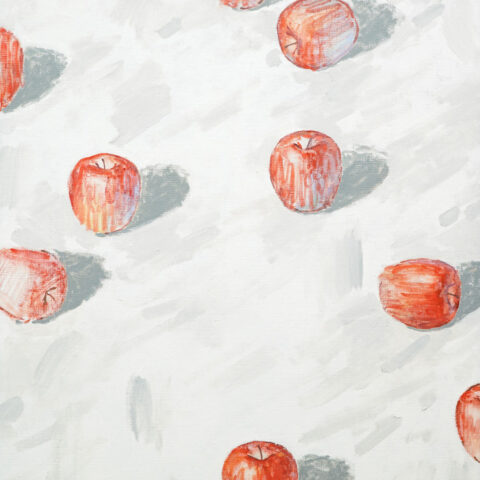
Apples on the Ground – Cassiopeia –
-
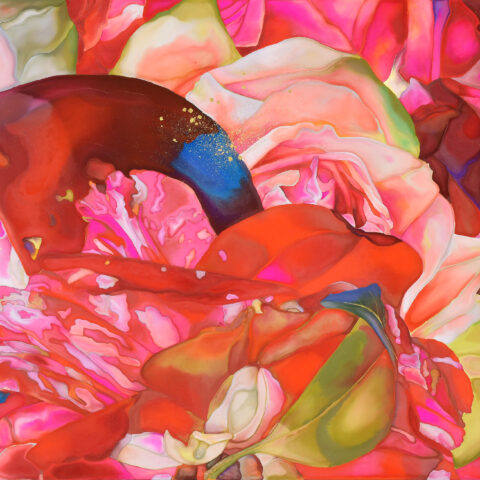
Undivided Flow #1
-
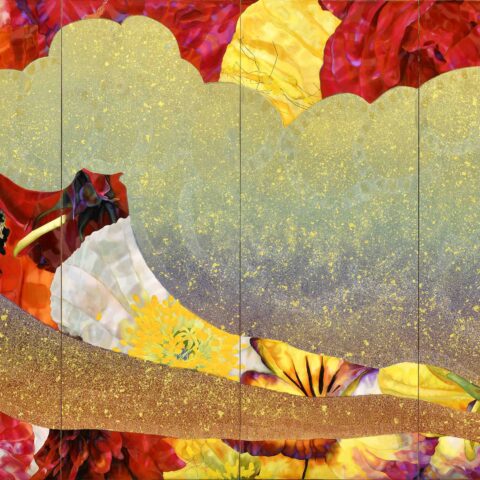
Blossoms as Cloud (Accumulation)
-
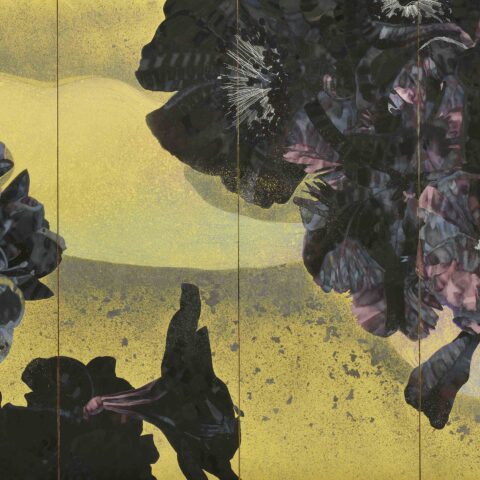
Blossoms in Drift (Transition)
-
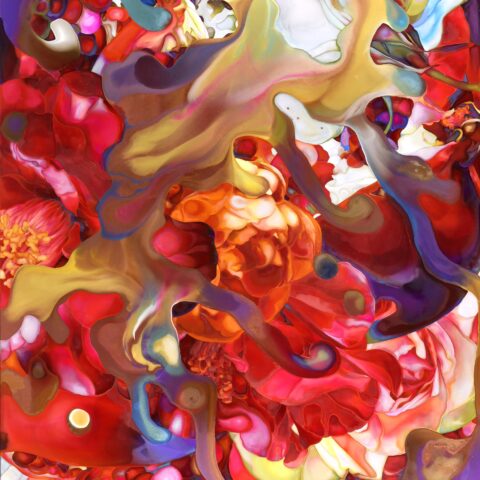
What Remains Unnamed
展覧会
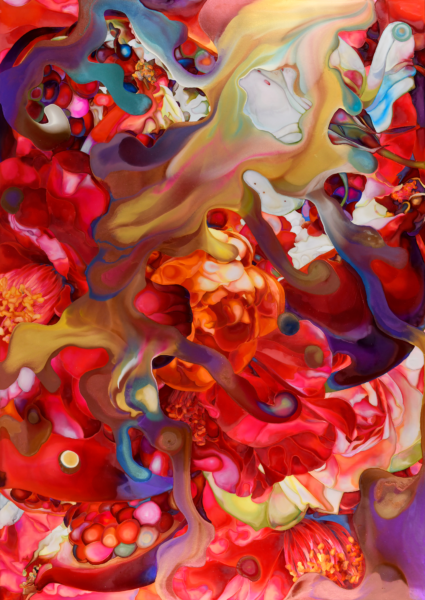
カタログ
-
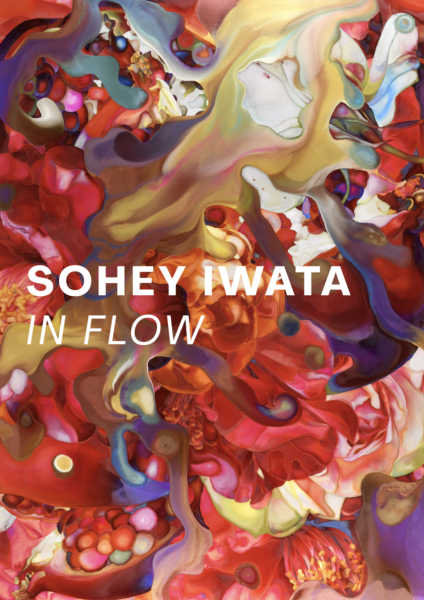
Sohey IWATA : In Flow