
Moïse Kisling

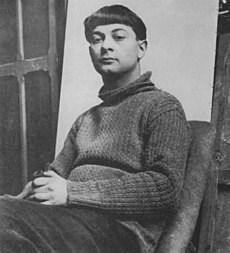
January 22, 1891 (Kraków, Poland) – April 29, 1953 (Sanary-sur-Mer, France)
Moïse Kisling was one of the painters of the first School of Paris, a group composed largely of foreign artists who came to train in the capital of the arts. After beginning his studies in 1906 at the Academy of Fine Arts in Kraków under the direction of Józef Pankiewicz, he moved in 1910 to the vibrant Montmartre district of Paris.
He quickly formed friendships with many of the great artists of the time, from Pablo Picasso to Amedeo Modigliani, and exhibited in various salons, notably the Salon d’Automne. Kisling’s work became imbued with the richness of the avant-garde movements surrounding him. The influence of Cézanne is evident in his earliest Parisian works, while he also adopted from the Nabis a radical elimination of perspective. In 1912 he joined the Cubists in Céret, where he received lessons on chromatic austerity, though he soon moved beyond it.
His joie de vivre, inventive and powerful temperament, and colorful anecdotes -particularly a sabre duel with another Polish artist- quickly made him a prominent figure in the life of Montparnasse. After World War I, his reputation grew and his studio became an important meeting place for artists. In 1919, the dealer Eugène Druet gave him his first solo exhibition.
He soon abandoned the chromatic austerity of his early years in favor of the color and forms of the Italian Renaissance primitives and Florentine Mannerism, following the example of contemporaries such as Derain and Modigliani. Within a refined realism softened by diaphanous light, he devoted himself to painting flowers and portraits of women, whose carefully rendered gaze conveys the deep emotion contained within the model.
In addition to his unquestionable success in France, his work entered museum collections around the world at an early stage, specially at the Whitney Museum and the Barnes Foundation in Philadelphia.
Exhibitions
-
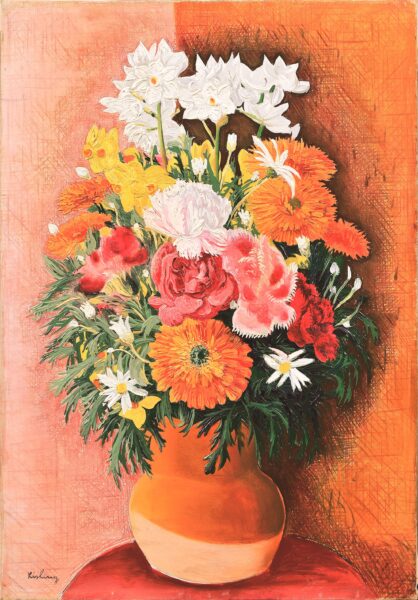
花展╶ 百花繚乱╶
31 October 2020 - 13 December 2020 / TOKYO -
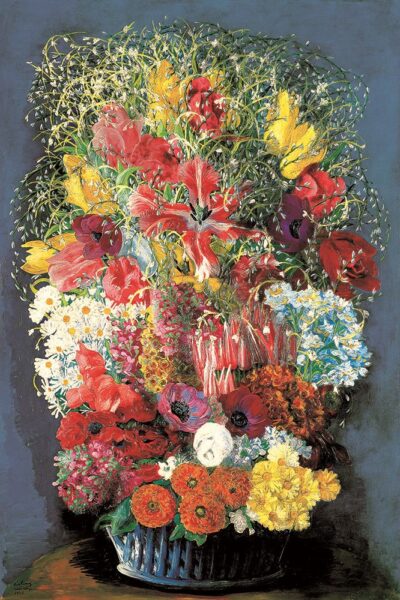
Les Fleurs
2 July 2020 - 26 July 2020 / OSAKA -
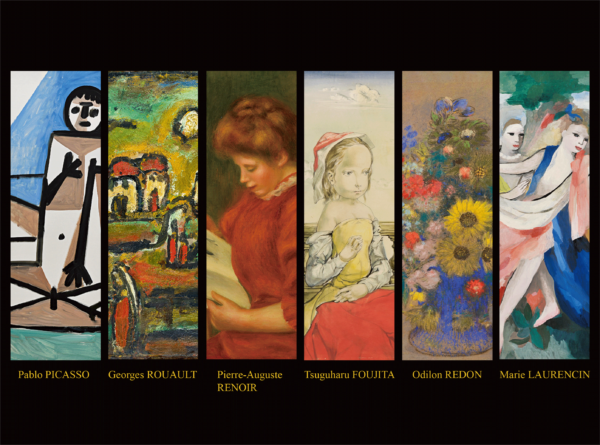
chefs-d’œuvre de la galerie taménaga
6 March 2020 - 12 April 2020 / OSAKA -
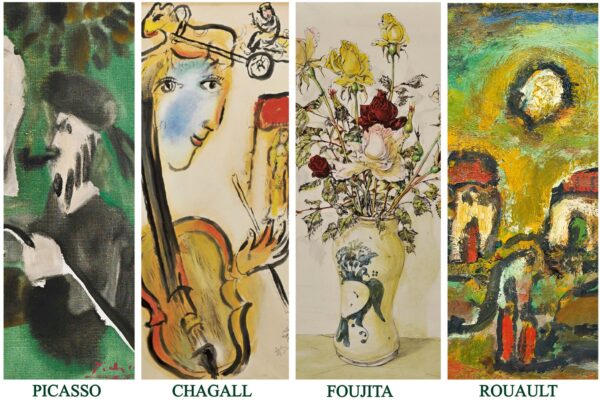
chefs-d’œuvre de la galerie taménaga
8 September 2019 - 8 December 2019 / TOKYO -
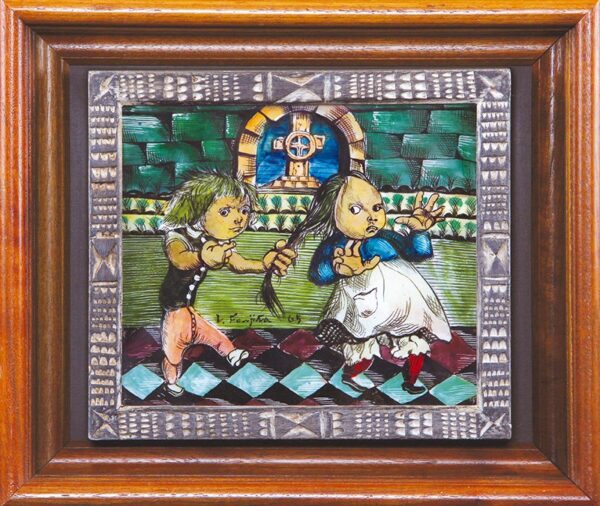
The small masterpieces Ⅷ
13 December 2018 - 13 January 2019 / OSAKA