
Marie Laurencin

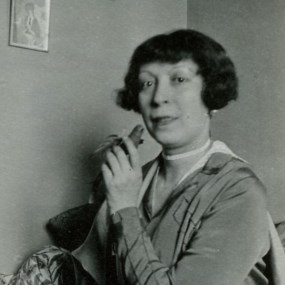
October 31, 1883 (Bordeaux, France) – June 8, 1956 (Paris, France)
Against the wishes of her mother, who wanted her to become a schoolteacher, the young Marie Laurencin began taking porcelain painting classes in Sèvres in 1901 and then oil painting classes at the Académie Humbert. In 1907, while exhibiting at the Clovis Sagot Gallery, she met Pablo Picasso and became interested in his paintings from the Blue and Rose periods. He subsequently introduced her to the artists of the Bateau-Lavoir in Montmartre and integrated her into the avant-garde circle. There she met Guillaume Apollinaire, with whom she shared a passionate love affair until 1912. Influenced by Fauvism and Cubism, Marie Laurencin simplified and idealized forms to create pastel-toned scenes often featuring portraits of young women in graceful poses. In 1911, the dealer Wilhelm Uhde organized an exhibition in which he negotiated a record sale of one of her paintings, making her known throughout Paris and Germany. Gradually she moved away from Cubism around 1913 and turned toward a more delicate style characterized by a fluid and gentle palette. Her growing success led to her appearance alongside Expressionist artists in the magazine Der Sturm, and to her first participation in the Armory Show.
Although World War I was a particularly difficult period for the artist due to her marriage to a German national, her return to Paris in 1921 marked a brilliant second chapter in her career. Renewing her contract with the dealer Paul Rosenberg, she exhibited alongside Picasso, Braque, Léger, and Matisse and received numerous commissions. Enjoying a life of luxury and social prominence, Marie Laurencin became the portraitist of the Tout-Paris of the Roaring Twenties. From this privileged position, she moved within musical circles and was commissioned to design stage curtains, sets, and costumes for the Ballets Russes, Les Soirées de Paris of Étienne de Beaumont, the Opéra-Comique, and the Comédie-Française.
During the last two decades of her life, Marie Laurencin’s reputation reached its peak: she was commissioned to decorate the Salon de l’Ambassadrice in 1925, received the Legion of Honour in 1935, and exhibited at the Petit Palais during the 1937 International Exposition, where sixteen of her paintings were proudly presented among the Masters of Independent Art.
Belonging to a time when women artists struggled to assert themselves against the notion of “male genius,” Marie Laurencin has been fully recognized as a key figure in the art world of the first half of the 20th century, notably thanks to a biography by Bertrand Meyer-Stabley and a major retrospective at the Musée Marmottan-Monet in 2013. Her work is particularly admired in Japan, where a museum entirely dedicated to her opened in Nagano in 1983. Today, her works can also be seen in institutions such as the Museum of Modern Art in New York, the Tate, and the Haggin Museum in Stockton, California.
Exhibitions
-
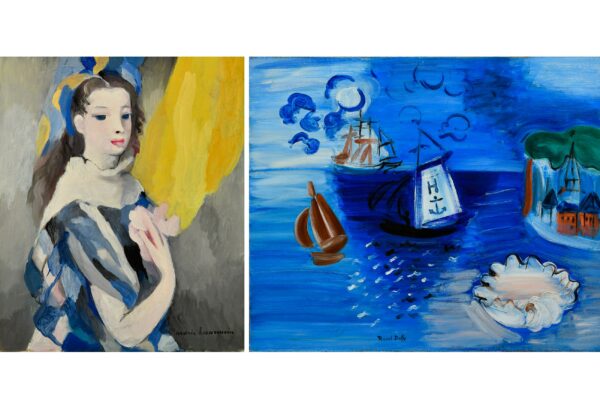
La Mode : DUFY & LAURENCIN
16 September 2023 - 15 October 2023 / TOKYO -
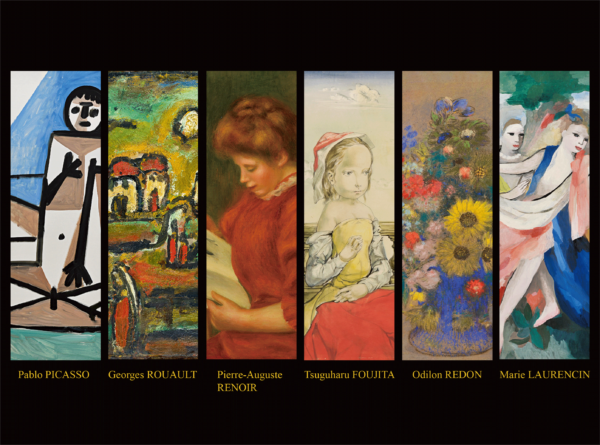
chefs-d’œuvre de la galerie taménaga
6 March 2020 - 12 April 2020 / OSAKA -
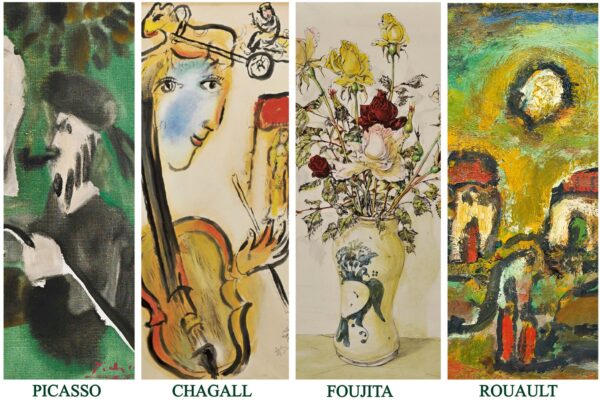
chefs-d’œuvre de la galerie taménaga
8 September 2019 - 8 December 2019 / TOKYO -
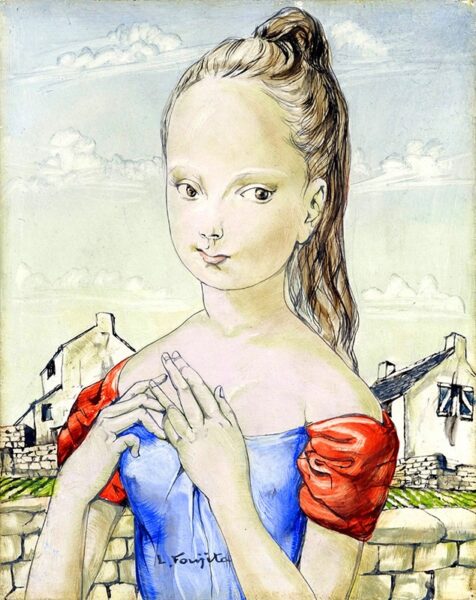
The small masterpieces Ⅱ
21 November 2011 - 18 December 2011 / OSAKA -
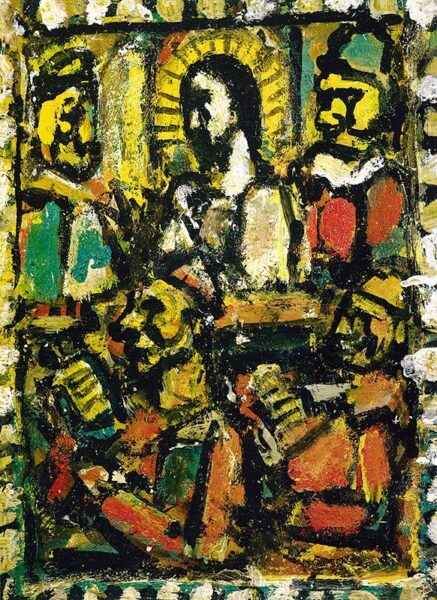
The small masterpieces
1 December 2010 - 26 December 2010 / OSAKA
Fairs
News
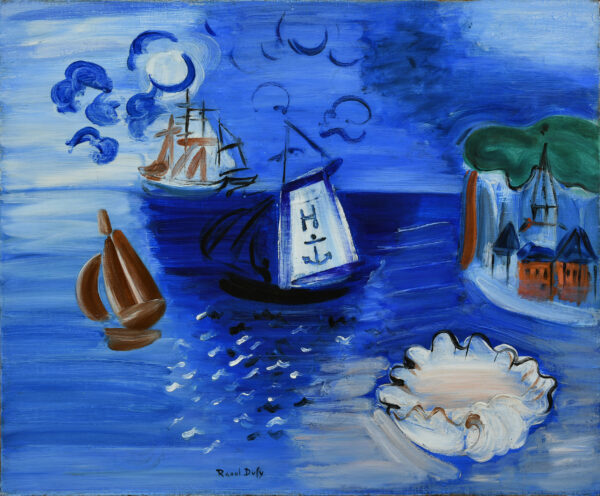

Publications
-
Chefs-d’oeuvre